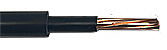
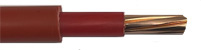
Cathodic protection cable, often referred to as cathodic cable or CP cable, is a specialist electrical cable designed for use in cathodic protection systems that help prevent corrosion on buried or submerged metal structures. These systems are commonly used to protect pipelines, storage tanks, marine structures, jetties, steel piling, offshore platforms, and underground infrastructure from rust and long-term corrosion damage.
Cathodic protection cables are engineered to carry low-voltage DC current from the power source or transformer rectifier to the anodes and protected structures within the cathodic protection system. Because these cables are frequently installed underground, underwater, or in harsh industrial environments, they are manufactured with highly durable insulation and sheath materials that provide excellent resistance to moisture, chemicals, abrasion, hydrocarbons, UV exposure, and mechanical stress.
XLPE/PVC (N2XY) Cathodic Protection Cable
XLPE/PVC (N2XY) cathodic protection cable is one of the most widely used CP cable constructions. It features:
XLPE (Cross-Linked Polyethylene) insulation
PVC outer sheath
Excellent electrical performance
High insulation resistance
Good chemical and moisture resistance
Suitable for direct burial applications
N2XY cathodic protection cable is commonly used on pipelines, petrochemical plants, refineries, and general industrial cathodic protection systems where reliable long-term corrosion protection is essential.
XLPE/XLPE Cathodic Protection Cable
XLPE/XLPE cathodic protection cable uses both XLPE insulation and an XLPE outer sheath, providing enhanced durability and improved resistance to harsh environmental conditions.
Key benefits include:
Superior thermal performance
Excellent moisture resistance
High dielectric strength
Strong resistance to abrasion and chemicals
Longer service life in demanding environments
XLPE/XLPE cathodic protection cables are often selected for heavy-duty industrial applications, offshore installations, and areas with aggressive soil conditions.
PVDF (KYNAR®)/HMPE Cathodic Protection Cable
PVDF (KYNAR®)/HMPE cathodic protection cable is a premium-grade CP cable designed for extremely harsh environments and critical infrastructure protection.
This advanced construction offers:
Outstanding chemical resistance
Exceptional resistance to hydrocarbons and solvents
High temperature performance
Excellent abrasion resistance
Very low moisture absorption
Long operational lifespan
PVDF (KYNAR®)/HMPE cathodic protection cable is commonly used in offshore oil and gas, marine environments, chemical plants, and deep groundbed installations where maximum reliability and corrosion resistance are required.
Cathodic protection cables are widely used in:
Oil and gas pipelines
Water pipelines
Underground storage tanks
Marine and offshore structures
Refineries and petrochemical facilities
Ports and harbours
Steel sheet piling
Power stations
Buried metallic infrastructure
Using the correct cathodic protection cable is critical for maintaining system efficiency and ensuring long-term corrosion protection. High-quality CP cables provide:
Long service life
Reliable DC current transmission
Reduced maintenance costs
Excellent environmental resistance
Improved protection against corrosion failure
Reliable performance in buried and submerged installations
Whether you require XLPE/PVC (N2XY), XLPE/XLPE, or PVDF (KYNAR®)/HMPE cathodic protection cable, selecting the correct cable construction helps ensure maximum durability and dependable corrosion protection in even the most demanding environments.
All in stock items ordered before 12.30pm will be despatched on a next day delivery.
Please Note: Scotland deliveries can take up to 3 days.
(Please see Shipping & Handling policy for full conditions.)
Cookie Notice
We use essential cookies to ensure the secure operation of this website, including order processing and fraud prevention. These cookies are required for the site to function correctly and cannot be disabled.
For more information about how we use cookies,
please read our Cookie Policy.
By continuing to use this website, you confirm that you understand and accept the use of essential cookies.
Accept Cookies